
Nice Riviera Côte d'Azur
en France

Site internet de Nice et du Comté de Nice. Son Actualité son Histoire, sa Culture et ses Traditions Niçoises.
Actualités des événements artistiques, culturels, historiques et touristiques.
Agenda des manifestations, réservation hôtels, Annuaire de Provence Alpes Riviera.


Country : GBCountry : US

Découvrez NiceRendezVous.com, site internet entièrement dédié à Nice, au Comté de Nice, à son actualité, son histoire et sa culture. Nous avons voulu donner au site le maximum d'attraits, notamment dans l'iconographie. Nécessairement condensé, ce site web contient néanmoins un très grand nombre d'informations digne des meilleurs ouvrages d'érudition.

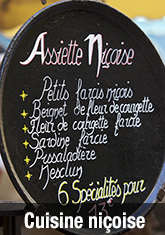
Nice Riviera Côte d'Azur - L'histoire de Nice, longue et complexe, a produit une identité particulière, qui se maintient toujours aujourd'hui. Cette histoire est différente de l'image d'opulence et de farniente qui est venue se greffer sur une région il est vrai privilégiée. Le Comté de Nice n'est pas une région riche. C'est un territoire montagneux, d'une superficie de 3 000 km2, avec une façade maritime étroite, de Nice à Cap d'Ail. Ce qui a fait longtemps la valeur de Nice et de sa région, ce fut sa position stratégique, à la fois débouché maritime et gardienne des passages alpins méridionaux. Nice a vécu, essentiellement d'un modeste commerce de transit, entre Marseille et Gênes et entre la mer et le Piémont, exportant surtout l'huile d'olive, le bois et le cuir de la montagne, et souffrant d'un déficit alimentaire chronique, mis en exergue lors de chaque conflit. Cette pauvreté est aujourd'hui encore sensible dans la cuisine niçoise, faite de produits simples, et guidée par un souci d'accommoder les restes qui est devenu un art.

En 1860, le Comté de Nice découvre une nouvelle patrie et en cent trente ans, Nice passe de 44 000 à 345 000 habitants. Elle voit fleurir le tourisme, invente l'horticulture moderne, multiplie sur ses collines les châteaux, villas de millionnaires et d'aristocrates, perce rues et boulevards, édifie casinos, opéra, hôtels au luxe incroyable, jusqu'à la première Guerre Mondiale. Dans ce tourbillon cosmopolite, l'identité niçoise, celle d'un peuple modeste et simple, s'est maintenue à travers sa langue, qui a quitté le devant de la scène sans pour autant disparaître. De nombreux auteurs, comme Francis Gag (1900-1988), d'importantes associations, comme l'Acadèmia nissarda, fondée en 1904, la défendent et la développent sans trêve.

La naissance du tourisme estival de masse, dès les Années 1930 a encore plus contribué à privilégier l'image du soleil au détriment de l'âme d'un vieux peuple, grec, latin, baroque, méditerranéen et montagnard. La loi d'airain du sentiment national a laissé peu de place à la finesse d'une histoire politique complexe, d'une culture multiple. Pourtant, ce sont elles qui, derrière les palmiers indolents, dans les ruelles silencieuses du haut Vieux-Nice, les quartiers industrieux du Port, les chemins ombreux des collines, font battre le coeur et vibrer l'âme des hommes et des femmes de cette terre, tout ensemble à découvrir pour en comprendre, au-delà des clichés, la profondeur.


Nice - Ville de Nice - Nice Côte d'Azur - nicerendezvous.com le site officiel de l'histoire de Nice et du Comté de Nice

<body> Nice France, Nice City, queen and capital of the French <b style="color:black;background-color:#ffff66">Riviera</b>, a place legendary for the frolicking and youthful indiscretions of the jet set; number one destination for those in pursuit of sex sun and the sea, glittering parties, festivals and long, crazy and perfumed nights by the Mediterranean; Nice, with its castles, palaces and casinos? But beneath this enticing postcard is a city and region that deserves better than this clich?d image, often artificial and always diminishing of its true grandeur. The inspiration for this website is to provide a venue through which you can discover the true nature and deep wealth of these places as well as the lavish creative activity of its inhabitants. The long and richly complex history of Nice has produced a special identity that is very different from the opulent image of a playground for carefree frolicking. The image of the <b style="color:black;background-color:#ffff66">Riviera</b> as the habitu? of the rich and famous belies the fact that there are many treasures to be discovered beyond this superficial postcard image. Nice is not, in its origins, a rich region. It is a mountainous territory with an area of 3000 square kilometers rimmed by a narrow coast often featured in views of the city. This coastal rim stretches from Nice to Cap d'Ail and for most of its history was characterized by poverty in stark contrast to its current opulence. A modest commerce plied the region from Marseille to Genova and between the Mediterranean and the Piemont. Its primary commodities were olive oil, wood and leather from the mountains. The chronic deficit of food resources led, ironically, to the øcuisine Nicoise.Ó This unique cuisine was crafted from already meager resources and the remains of what would normally be considered leftovers and the residue of meals. What would have been discarded by most was raised, in the inimitable French way to high culinary art! For much of its history Nice's value was primarily its strategic position for transport and as a guardian of the southern Alpine passages. In 1860 the Comte de Nice became a part of the nation of France and struggled for years with the process of integration. In 140 years the population increased form 44,000 to 370,000. In the intervening years she experienced a burgeoning tourism, invented modern horticulture and saw the proliferation of the castles and villas of millionaires and aristocrats on its verdant hillsides and its meandering streets and boulevards. These opulent residences, as well as opera houses, casinos and luxury hotels, built by the skilled hands of thousands of Italian artisans and craftsmen display a rich and varied architectural legacy. Yet in the midst of this cosmopolitan whirlwind beats the heart of Nice, modest and simple, which is embodied in the Nice patois known as, "nissarte." Many authors, such as Francis Gag (1900-1908) have preserved this idiom in a variety of literary works. The birth around 1930 of mass tourism has contributed to the narrowing of the view of Nice to its sun-drenched pleasures. This has been to the detriment of its soul, at once Greek, Latin & Baroque; of the Mediterranean and mountains, of its people; poorer, rougher, more simple and loving than the popular image reveals. The image prevalent today of Nice knows not of its rich yesterdays; leaves little room for appreciating the fineness of a complex and rich history and a dynamic and diverse culture. Behind the indolent palm trees, in the silent and tiny streets of Old Nice, the industrious neighborhoods of the harbor, the shaded pathways in the hills beats the heart and vibrates the soul of the men and women of this place. It is here, beyond the clich?s that the true depth of this magnificent place is revealed. Welcome to our website !